Key practical takeaways from our latest AI event for SME leaders trying to turn AI into real business results
There is still a lot of noise around AI, whether it be new tools or fresh claims and promises about productivity.
But, one of the clearest messages from our recent AI event was that AI adoption is no longer something businesses are waiting for. It is already happening.
Employees are already using generative AI to write, research, summarise, analyse, create and automate parts of their working day and that surfaces huge opportunities as well as risks in equal measure.
It also creates a very obvious question for MDs and FDs …
Do you actually know how AI is being used inside your business today?
That was one thread running throughout the event. Most do not know who or what is being used inside their businesses. And a key approach put forward was to undertake a simple internal audit, list employees, invite them to state what AI they use daily and ask what they are using it for. If it’s data related then this links out to developing policies and procedures – read on.
Need help, book in for a 30 min chat about your challenges with one of our experts here
AI adoption is already ahead of many management teams
With 63% of UK employees already using generative AI for work, it means the AI strategy in many businesses is already being written from the bottom up by end users.
People are finding tools that help them do their jobs. Finance teams are summarising information. Salespeople are drafting emails. Marketing teams are generating content. Managers are analysing documents. Operations teams are looking for quicker ways to handle repetitive work.
None of this is particularly surprising as people have always found shortcuts when a tool makes their job easier. The big difference with AI is the information they may be feeding into those tools to get the result. And, that leads directly into one of the biggest issues discussed at the event.
Shadow AI is the new Shadow IT
Businesses have dealt with Shadow IT for years – tech used by employees without the knowledge or approval of senior management. Examples include, someone creates a personal Dropbox account, a team starts using an unapproved application or an employee sends work to a personal email address because it is easier.
AI is the same problem in a much more powerful form. So, how big is this ‘problem’? One figure presented said 31% of UK employees use their own paid AI subscriptions to complete work.
That should make business leaders stop and think. If somebody is using their own ChatGPT, Claude or another AI account to get their job done, what are they putting into it? Customer information? Contracts? Financial data? HR information?
The issue is not necessarily that the employee is doing something malicious, usually the opposite is true, they are trying to be more productive.
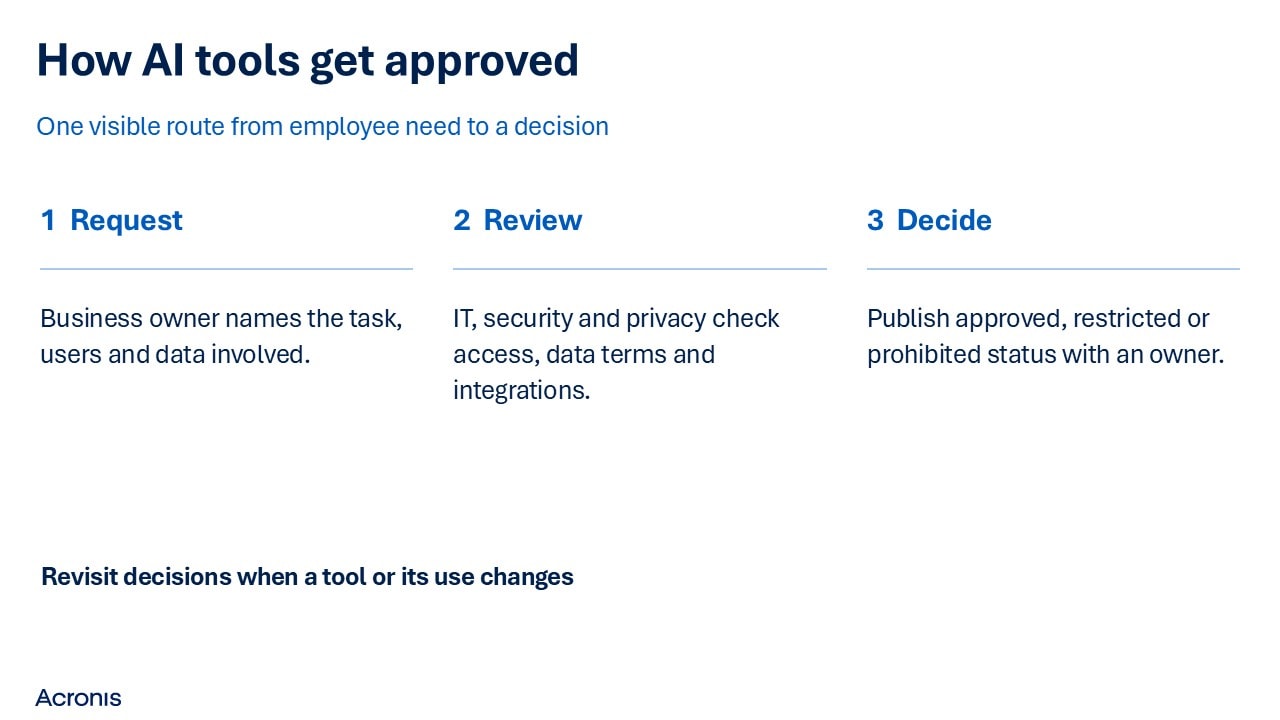
But, you cannot manage a risk you are blind to. That is why one of the biggest takeaways from the session was that AI policy needs to come before mass AI rollout.
Creating a useful AI policy should make work easier, not harder
Mention “AI policy” and it is easy to imagine a 30-page document collecting digital dust in SharePoint…that is absolutely not what employees need.
A good policy should not simply say “no”.
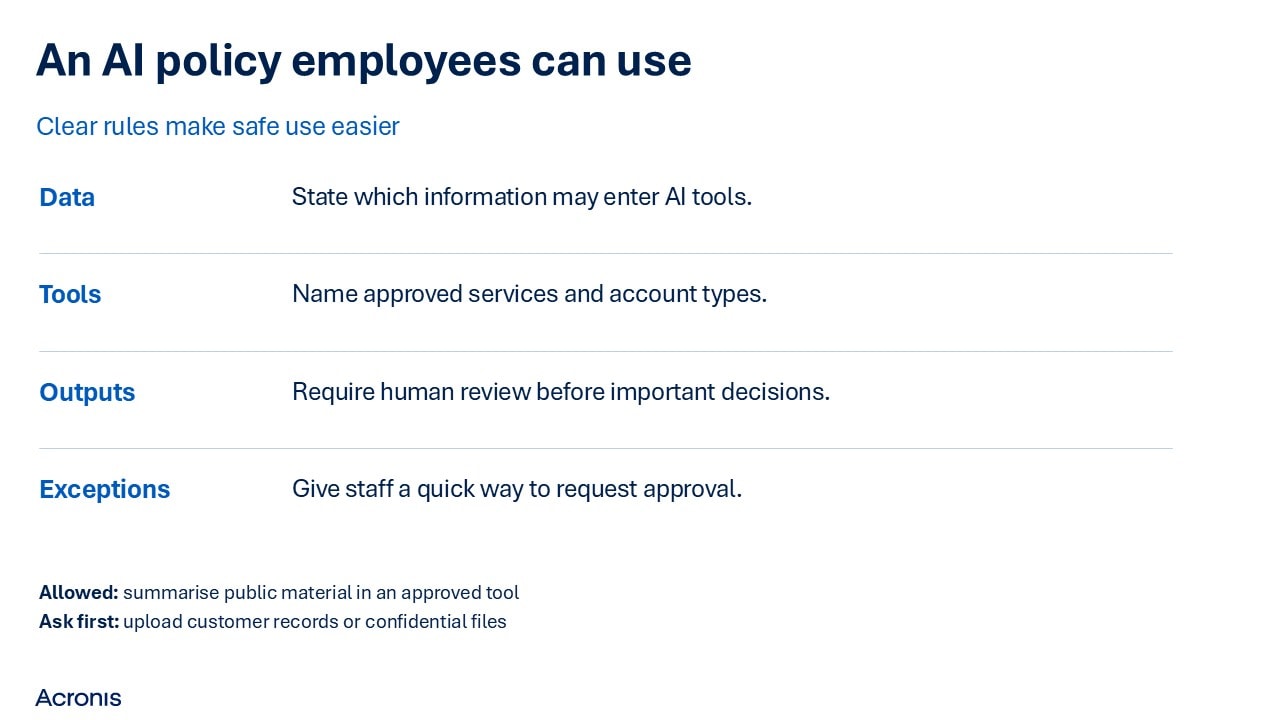
Here’s some practical advice from the event, build your policy around four areas:
Data. Be clear about what information can and cannot enter an AI tool.
Tools. Tell people which AI services and account types are approved.
Outputs. Make sure important AI-generated work is reviewed by a person before it is relied upon.
Exceptions. Give employees a simple way to ask when they have a legitimate use case that falls outside the normal rules.
Done properly, governance should support AI adoption rather than present barriers.
Buying Copilot does not automatically make you AI-ready
This was probably one of the most important points of the morning and it tackles a very common misperception.
Here’s a scenario, your receptionist doesn’t and shouldn’t have access to payroll information. However, several years ago somebody accidentally gave a SharePoint folder overly broad permissions that meant your receptionist technically has access, they just weren’t aware of that fact.
Then you introduce Microsoft Copilot.
The employee asks …
“What is everybody in the company paid?”
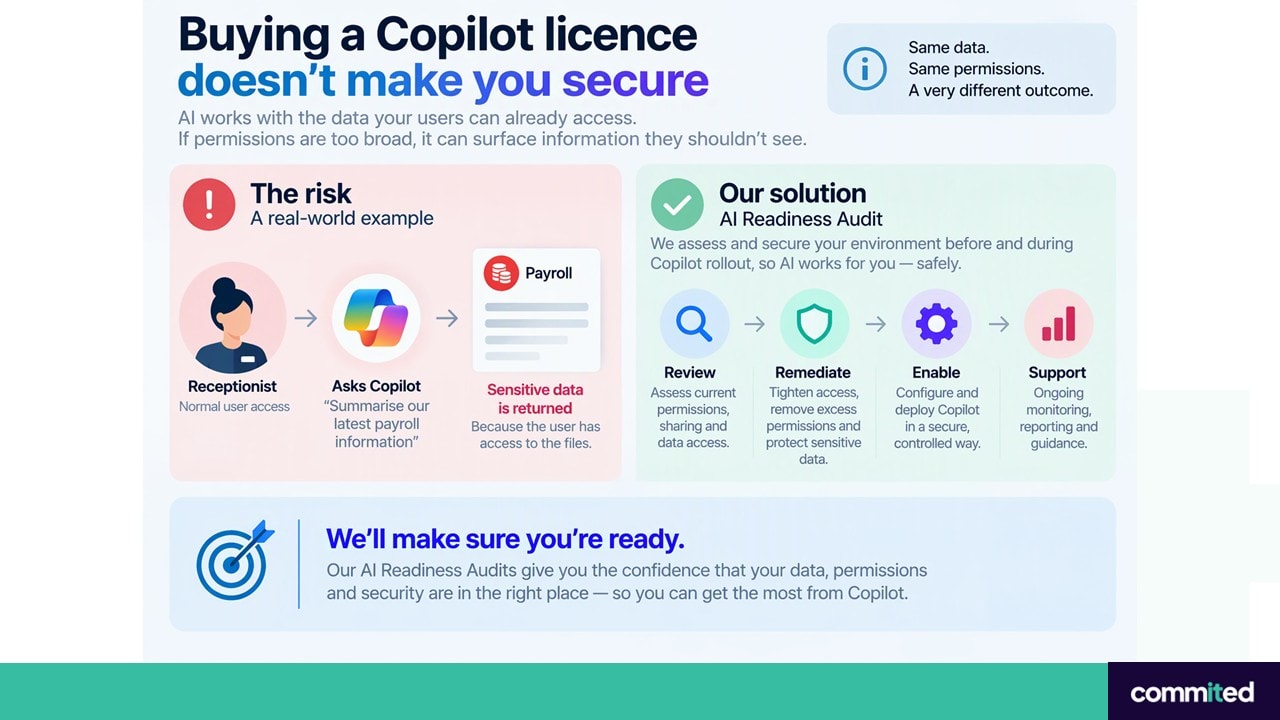
Copilot can now find that information that was previously technically accessible but difficult to discover. Copilot has not created the permission problem, but it has exposed it.
That is why introducing AI into Microsoft 365 should not begin with buying licences, it should begin by understanding the environment AI is being allowed to work across. Need help, book in for a 30 min chat about your challenges with one of our experts here
Some key questions to ask yourself:
- Who has access to what?
- Where is sensitive information stored?
- Which folders have been shared widely?
- Are old permissions still hanging around?
- Are former employees or suppliers still able to access information they no longer need?
AI makes information easier to find and that is one of its great strengths but it is also why poor data governance suddenly matters much more. As a result it’s critical to get your systems and data in a good place before unleashing AI formally, and another reason why managing end user usage is important.
Using AI Agents and the business case
The opportunity is real and Edd Dale brought it to life

Edd Dale’s live demonstrations helped bring the practical side of AI to life and moved the conversation away from abstract claims about what AI “might” eventually do to a real life project scenario.
Edd showed how to deliver prompts to bring to life a GTM strategy, and project from a simple project team meeting transcription into time-lined project plan and more. All done in a live environment.
For many SME leaders, AI feels slightly theoretical until you see it used against real work and projects. The questions changed from “What can AI do?” to “Where in our business could this remove work?”
If you’d like Edd to provide training or a workshop session in your business, register your interest here, referencing Edd by name.
75% of UK businesses using AI report improved workforce productivity

The opportunity of AI is about looking at the repetitive, administrative and time-consuming parts of people’s jobs and asking whether technology can give some of that time back. Or simply helping capable people spend less of their day doing low-value work.
For an SME with limited internal capacity, that can be significant.
AI needs a business case, not just enthusiasm
An important element of any technology journey is to define clear objectives and outcomes. AI deployment is no different.
Start with a business problem, and think about some common scenarios to tackle first.
- Where are people losing time?
- Where are processes too manual?
- Where does information get stuck?
- Where are employees doing repetitive work?
- Where could faster access to data improve customer service or decisions?
Think about some outcomes you might want to achieve in each scenario like productivity, capacity, margin, customer service, growth. This will help you be really clear about ‘what’ you want AI to do for your business.
Security and productivity have to move together
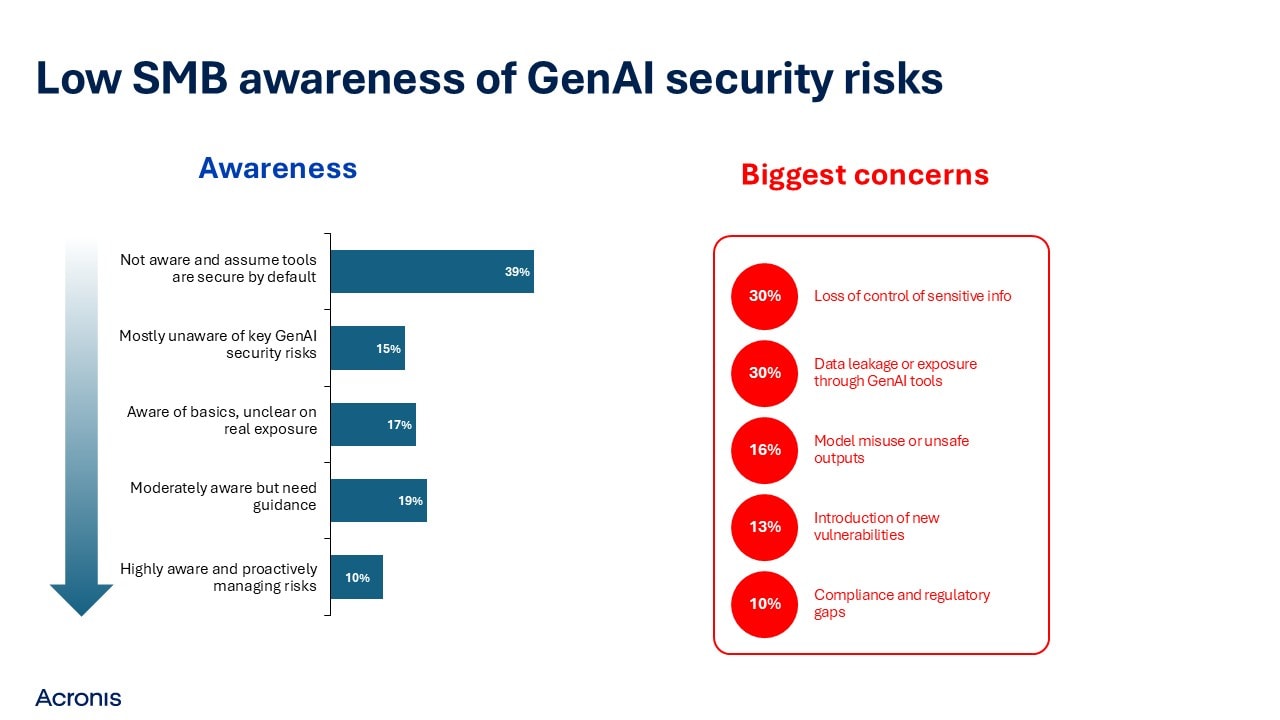
Neil Jelley from Acronis also brought the security side of the AI conversation into focus.
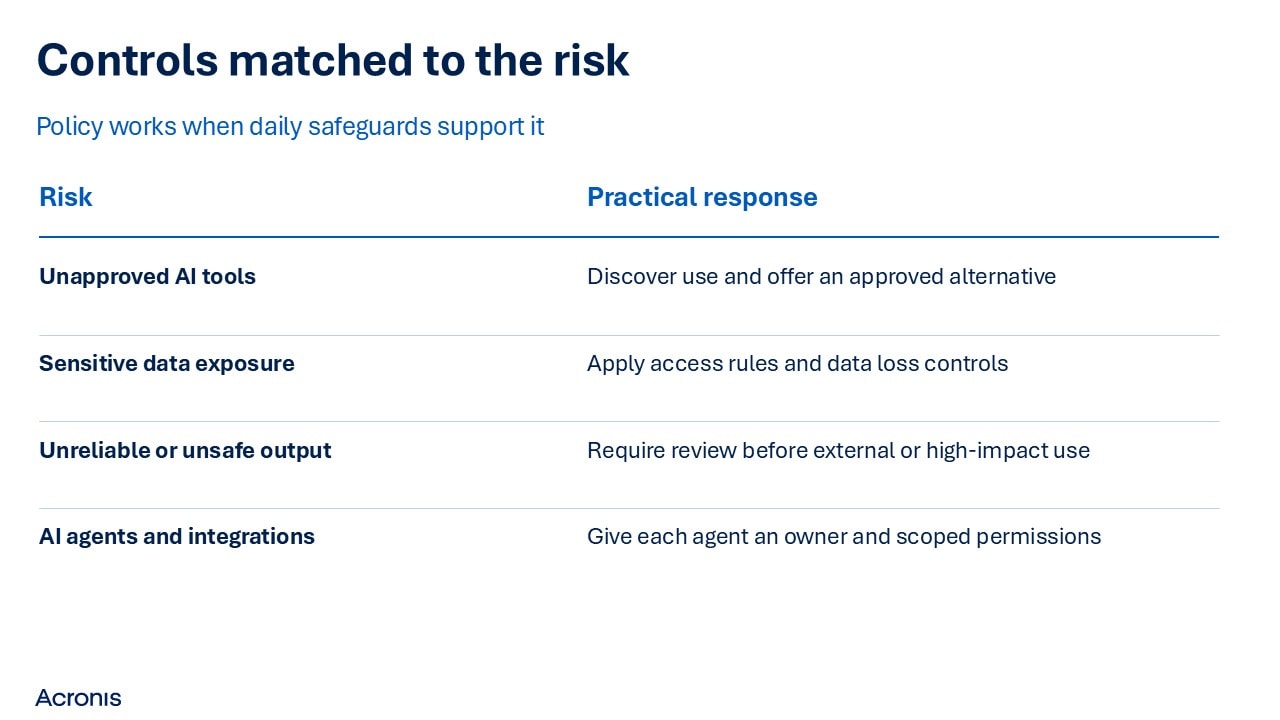
The event covered the risks created by unapproved AI tools, sensitive data being entered into AI services and increasingly powerful agents being given access to company systems.
Some key points highlighted you should consider
- Know which tools are being used
- Give employees an approved alternative
- Control access to sensitive information
- Put sensible rules around AI agents and integrations
- Monitor adoption – who, what, when
- Invest in training users well
Adoption without security creates unnecessary risk in any business, so the two need to move together.
Right, where should an SME start with AI?
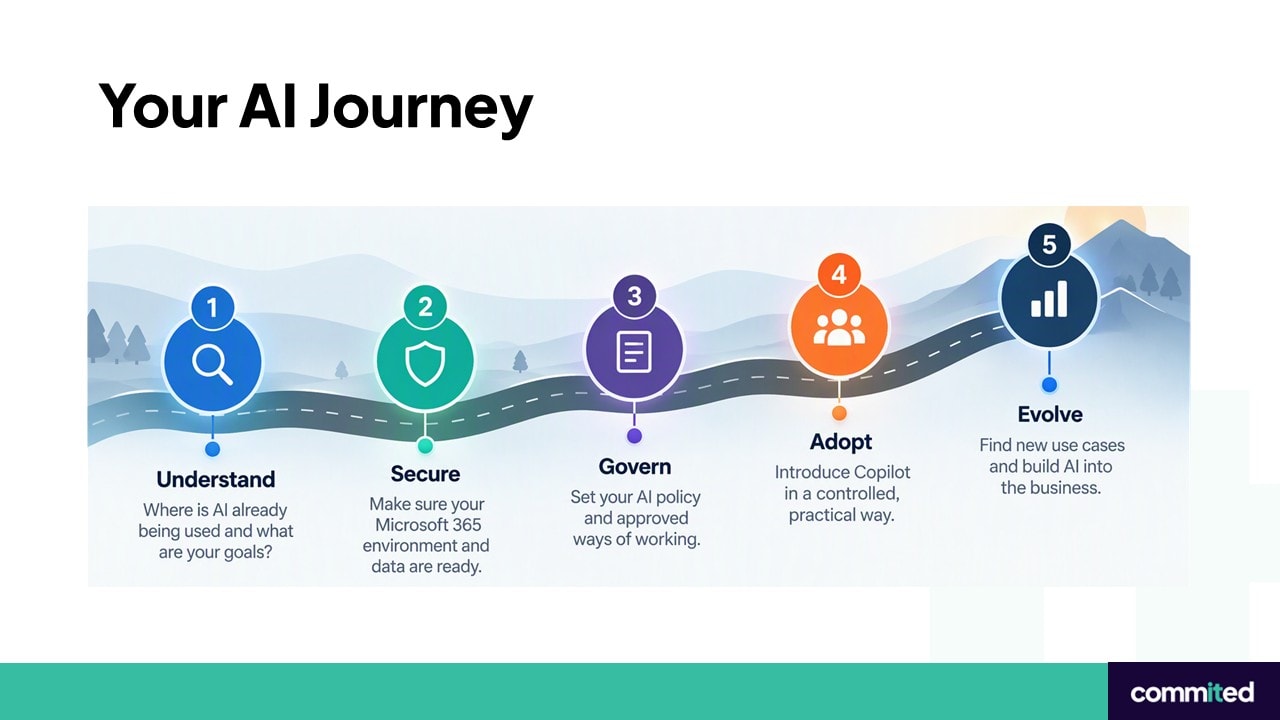
The event boiled the journey down to a deliberately simple map. First, understand what is already happening. Find out what AI tools employees are using and where demand already exists.
Then make sure your Microsoft 365 environment and company data are ready. Review access, permissions, sharing and sensitive information before giving AI more power to search across it.
Next, put sensible policy around AI use and make it clear what is allowed and give people a route to ask questions. Then, introduce approved tools properly, do not simply hand out licences and hope adoption takes care of itself.
Finally, start identifying the parts of the business where AI can create a measurable return and that is where experimentation turns into strategy.
The biggest risk may be doing nothing
One of the strongest messages from the event was that doing nothing is not the safe option. Your employees are already using AI, making decisions about which tools to use and what information to put into them and how AI fits into their jobs.
So, for leadership you need to think carefully about managing adoption versus total chaos and the risks of unmanaged adoption.
The businesses that benefit most will be the ones that bring the two together, clear policy, secure foundations, practical use cases and a focus on measurable business outcomes.
Is AI already showing up in your business?
If you are unsure what AI is already being used in your business, whether your Microsoft 365 environment is ready, or where AI could genuinely improve productivity, book a 30 min chat about your challenges with one of our experts here